
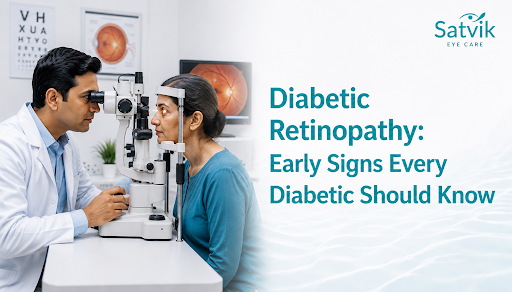
Diabetes can affect many parts of the body, including the eyes. One of the most important diabetes-related eye conditions is diabetic retinopathy, which develops when prolonged high blood sugar damages the small blood vessels in the retina. In its early stages, diabetic retinopathy may not cause noticeable symptoms, which is why regular eye examinations are important for people with diabetes.
Understanding the diabetic retinopathy early signs can help you recognise possible changes in your eyesight and seek timely medical advice. Early diagnosis, proper diabetes management, and regular eye care can help reduce the risk of serious vision complications.
At Satvik Eye Care, Gurgaon, Dr. Deepa Gupta provides comprehensive ophthalmic care and has extensive experience in managing a wide range of eye conditions. Regular eye examinations can help identify diabetes-related retinal changes before they significantly affect vision.
What Is Diabetic Retinopathy?
Diabetic retinopathy is a diabetes-related eye condition that affects the retina, the light-sensitive tissue located at the back of the eye. The retina receives light and converts it into signals that are sent to the brain, allowing us to see.
When blood sugar remains high for a prolonged period, it can damage the tiny blood vessels supplying the retina. These blood vessels may leak fluid or blood, become blocked, or lead to the growth of abnormal blood vessels.
As the condition progresses, these changes can affect vision. In severe cases, diabetic retinopathy can result in significant vision loss.
The condition can occur in people with both type 1 and type 2 diabetes. The risk generally increases with the duration of diabetes and poor blood sugar control.
Diabetic Retinopathy Early Signs to Watch For
One of the biggest concerns with diabetic retinopathy is that it can develop without obvious symptoms. However, certain changes in vision may indicate that the eyes need professional evaluation.
1. Blurred Vision
Blurred vision is one of the common diabetic retinopathy symptoms. You may notice that objects appear less sharp, reading becomes difficult, or your vision is not as clear as it used to be.
Blood sugar fluctuations can also temporarily affect vision, so blurred vision does not always mean diabetic retinopathy is present. However, persistent or recurring blurred vision should be evaluated by an ophthalmologist.
2. Dark Spots or Floaters
Dark spots, specks, or floating shapes in your field of vision can be another warning sign.
A few occasional floaters can occur for several reasons. However, a sudden increase in floaters, particularly in a person with diabetes, should not be ignored. Bleeding from damaged retinal blood vessels can sometimes cause these visual disturbances.
3. Difficulty Seeing at Night
Some people with diabetes may experience difficulty seeing clearly in low-light conditions. You may find it harder to move around in dark environments or notice objects at night.
Night vision problems can have several causes, but when they occur with other visual changes, an eye examination can help determine the underlying reason.
4. Dark or Empty Areas in Vision
Some people may notice dark patches, shadows, or missing areas in their field of vision.
These changes can be associated with retinal problems and should receive timely medical attention. Sudden changes in the visual field can sometimes indicate a serious retinal complication.
5. Fluctuating Vision
Vision that changes frequently can also be a concern for people with diabetes. Blood sugar fluctuations may temporarily affect the eye’s ability to focus.
However, frequent or persistent changes should not simply be attributed to diabetes. An ophthalmologist can examine the eyes and determine whether diabetic retinopathy or another eye condition is responsible.
Early Symptoms of Diabetic Retinopathy May Be Hard to Notice
The early symptoms of diabetic retinopathy can be subtle. Some people may have retinal changes without experiencing any noticeable vision problems.
This is why waiting for symptoms before getting an eye examination is not recommended. Regular diabetic eye screening can help identify retinal changes at an earlier stage.
At Satvik Eye Care, Gurgaon, a comprehensive eye evaluation can help assess the health of the retina and identify potential problems that may not yet be affecting your vision.
What Causes Diabetic Retinopathy?
The main cause of diabetic retinopathy is prolonged high blood sugar. Over time, elevated glucose levels can damage the small blood vessels of the retina.
Several factors may increase the risk of developing or worsening diabetic retinopathy, including:
- Poor blood sugar control
- Longer duration of diabetes
- High blood pressure
- High cholesterol
- Smoking
- Pregnancy in women with diabetes
- Other diabetes-related complications
Managing these factors along with regular eye examinations can support better long-term eye health.
Signs of Diabetic Retinopathy You Should Not Ignore
The signs of diabetic retinopathy can vary depending on the stage and severity of the condition.
Some possible warning signs include:
- Blurred or distorted vision
- Increased floaters or dark spots
- Difficulty seeing in low-light conditions
- Dark or empty areas in the visual field
- Fluctuating vision
- Difficulty seeing fine details
- Sudden or significant reduction in vision in advanced cases
It is important to remember that the absence of symptoms does not necessarily mean the retina is healthy.
How Is Diabetic Retinopathy Diagnosed?
A comprehensive eye examination is important for detecting diabetic retinopathy. During the examination, an ophthalmologist evaluates the retina for changes such as damaged blood vessels, bleeding, swelling, or abnormal blood vessel growth.
Depending on the patient’s condition, the ophthalmologist may recommend:
- Dilated retinal examination
- Visual acuity testing
- Retinal imaging
- Optical coherence tomography (OCT)
- Fluorescein angiography when required
These examinations help the eye specialist understand the condition of the retina and decide whether regular monitoring or treatment is needed.
Dr. Deepa Gupta at Satvik Eye Care, Gurgaon, has extensive experience in ophthalmology and provides personalised eye evaluations based on the patient’s individual condition and visual needs.
Why Regular Eye Check-Ups Are Important for Diabetics
Regular eye examinations are especially important for people with diabetes because diabetic retinopathy can develop without noticeable symptoms.
You may feel that your eyesight is normal while early retinal changes are already occurring. A comprehensive eye examination can detect these changes before they cause significant visual problems.
The recommended frequency of eye examinations depends on factors such as the type and duration of diabetes, blood sugar control, previous retinal findings, pregnancy, and overall health. Your ophthalmologist can recommend a suitable screening schedule based on your individual needs.
Can Diabetic Retinopathy Be Prevented?
Diabetic retinopathy cannot always be completely prevented, but maintaining good control of diabetes can help lower the risk of developing or worsening retinal damage.
Maintain Healthy Blood Sugar Levels
Follow your diabetes management plan and monitor blood glucose as recommended by your healthcare provider. Good blood sugar control can help reduce damage to small blood vessels.
Monitor Blood Pressure and Cholesterol
High blood pressure and abnormal cholesterol levels can increase the risk of blood vessel damage. Regular monitoring and appropriate management are important for overall health.
Schedule Regular Eye Examinations
Do not wait until blurred vision or floaters develop. Regular diabetic eye screening can help detect retinal changes before symptoms become noticeable.
Avoid Smoking
Smoking can negatively affect blood vessels and overall health. Avoiding tobacco can support better cardiovascular and eye health.
Follow Your Doctor’s Recommendations
If diabetic retinal changes have already been detected, follow the recommended follow-up schedule. Regular monitoring allows your ophthalmologist to identify progression and recommend appropriate management.
Diabetic Retinopathy Treatment
Treatment depends on the stage of diabetic retinopathy and whether complications such as diabetic macular edema are present.
Some people may only require regular monitoring and better management of their diabetes. Depending on the severity of the condition, treatment may include medicines delivered into the eye, laser treatment, or surgery for advanced complications.
The appropriate treatment is determined after a detailed retinal examination. Early detection allows the ophthalmologist to monitor changes closely and provide treatment when required.
When Should You See an Ophthalmologist?
People with diabetes should have regular eye examinations even when they do not experience symptoms. However, you should seek prompt medical attention if you notice:
- A sudden increase in floaters
- Flashes of light
- Dark shadows or a curtain-like effect in your vision
- Sudden blurred vision
- Significant loss of vision
- New or rapidly worsening visual changes
Sudden changes in vision can sometimes indicate a serious retinal problem and require timely evaluation.
Expert Eye Care at Satvik Eye Care, Gurgaon
At Satvik Eye Care, Gurgaon, patients can receive comprehensive eye care focused on accurate diagnosis and personalised treatment. Dr. Deepa Gupta, an experienced ophthalmologist, has extensive expertise in ophthalmology, including cataract, cornea, refractive surgery, and the management of various eye conditions.
For people living with diabetes, regular eye examinations are an important part of maintaining long-term eye health. If you have diabetes or are experiencing changes in your vision, consulting an ophthalmologist can help identify potential problems early.
Conclusion
Diabetic retinopathy is a serious diabetes-related eye condition that can develop gradually and may remain unnoticed during its early stages. Knowing the diabetic retinopathy early signs, including blurred vision, floaters, difficulty seeing at night, fluctuating vision, and changes in the visual field, can encourage timely medical evaluation.
However, the absence of symptoms does not mean that the retina is unaffected. Regular diabetic eye examinations, proper blood sugar management, healthy lifestyle habits, and timely ophthalmic care are essential for protecting vision.
If you have diabetes and want to monitor your eye health, Satvik Eye Care, Gurgaon, offers comprehensive ophthalmic care under the guidance of Dr. Deepa Gupta. A timely eye examination can help detect retinal changes early and support appropriate management to protect your vision for the long term.
Frequently Asked Questions
What are the early signs of diabetic retinopathy?
The early signs may include blurred vision, floaters, difficulty seeing at night, fluctuating vision, or difficulty seeing fine details. However, diabetic retinopathy can also develop without noticeable symptoms.
Can diabetic retinopathy cause vision loss?
Yes. If diabetic retinopathy progresses and is not appropriately managed, it can cause serious vision problems and, in advanced cases, significant vision loss.
Can diabetic retinopathy be treated?
Yes. Depending on its stage and complications, diabetic retinopathy may be managed through regular monitoring, medicines, laser treatment, or surgery in selected cases.
Can diabetic retinopathy be present without symptoms?
Yes. Early diabetic retinopathy may not cause noticeable changes in vision. This is one of the main reasons regular diabetic eye examinations are important.